
Home > Hernia Treatment> Incisional hernia
Dr. Achal Agrawal, a qualified surgeon and specialist in advanced and minimally invasive surgery, offers the highest level of expert care for incisional hernia treatment in Indore. With expert precision assessment and intervention, patients benefit from less post-operative pain and faster recovery so they can get back to their health and lifestyle, with trusted medical expertise on their side.
An incisional hernia is a bulge that forms at or near the scar of an earlier abdominal surgery, where the muscle wall has weakened. If you are looking for incisional hernia treatment in Indore, Dr. Achal Agrawal, consultant laparoscopic and GI surgeon at Indore Laparoscopy Center, Indore, can examine the area and explain which repair fits you. It can follow a C-section, hysterectomy, gallbladder or appendix surgery. Some people notice it only when they cough or stand. Others feel a constant pull. Either way, it will not close by itself, so get it checked.
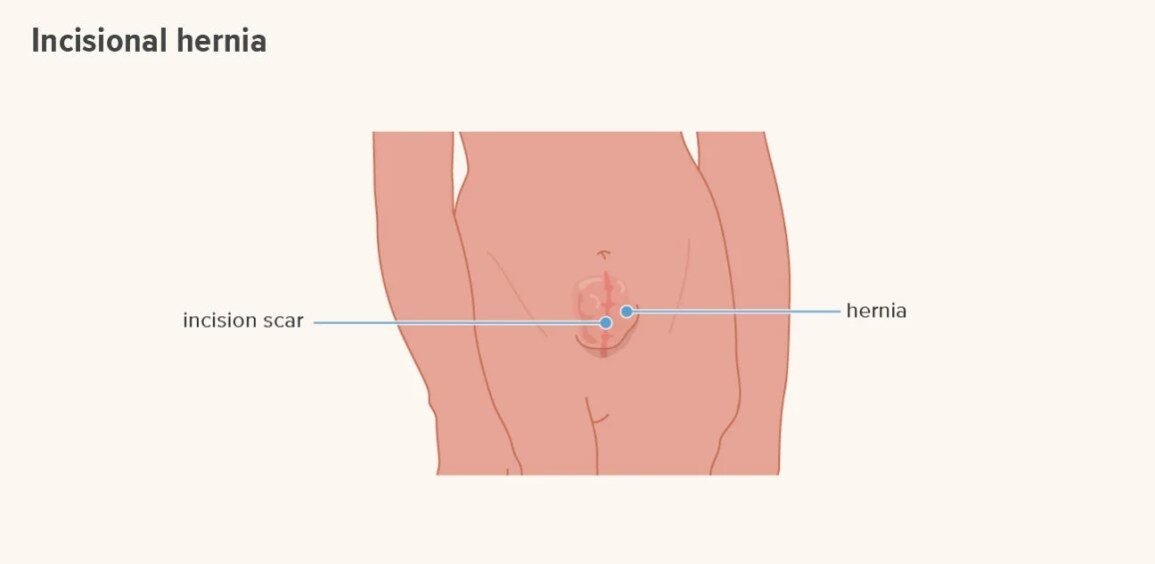
Get medical care immediately if the bulge turns hard, becomes tender or cannot be pushed back, or if you have sudden severe pain. These can mean the bowel is trapped and losing its blood supply. Do not wait for a routine appointment.
Other warning signs:
The protrusion of abdominal tissue or organ fragments through the abdominal wall is known as an incisional hernia. On the abdomen, they typically occur along or along surgical scars.
Incisional hernias are typically not dangerous. They may, however, enlarge with time and impair ordinary breathing and movement. Additionally, it may be more difficult to operate on large hernias than smaller ones.
People may not undergo surgery for an incisional hernia if it is minor; not causing any issues, and has a low risk of developing complications.
Repair closes the weak spot in the abdominal wall, and a mesh is usually placed for support. The main approaches are open, laparoscopic and robotic. The choice depends on the size of the hernia, earlier surgeries, whether it has come back, and your general health. Your surgeon decides after examination.
Option | How it is done | Suitable for | Recovery |
Open mesh repair | A cut over the scar; mesh placed to support the wall | Many hernias, including larger ones, after assessment | Generally, hospital discharge takes 2–3 days. Comfortable walking may take 5–7 days. |
Laparoscopic repair | Small keyhole cuts, camera-guided, mesh placed inside | Selected cases after assessment | Walking may begin within 3–4 hours, and discharge may be possible the next day, depending on recovery. |
Robotic repair | Keyhole approach using a robotic system | Selected complex hernias, depending on the surgeon’s assessment. | Walking may begin within 3–4 hours, and discharge may be possible the next day, depending on recovery. |
Large or complex repair (component separation) | Muscle layers released to close a wide gap | Large, complex or recurrent hernias | Depends on the complexity of the repair and the patient’s recovery. |
A scar hernia sits on tissue that has already weakened once, so mesh gives the wall extra support. No single technique is right for everyone. Read more about ventral hernia surgery in Indore or see all hernia surgery options in Indore.
Request a Callback
Any of the following signs may indicate an incisional hernia in persons who have had prior abdominal surgery:
Incisional hernias can occasionally result from abdominal surgery.
An abdominal wall wound may not always heal as firmly as it should and the abdominal wall recovers nicely following surgery in the majority of cases. This indicates that the abdominal wall is less strong around the scarred area and is unable to maintain its integrity in the face of abdominal pressure. Organs, intestinal tissue, or abdominal tissue may protrude through the weak spot.
Incisional Hernia Doctor will take a medical history and carry out a physical examination to diagnose an incisional hernia.It includes:
Incisional hernia includes:
The cost is not a fixed number. It changes with the size of the hernia, the technique, the mesh used, the hospital and room type, tests before surgery, and insurance coverage. Ask for a written estimate before you decide. Prices:
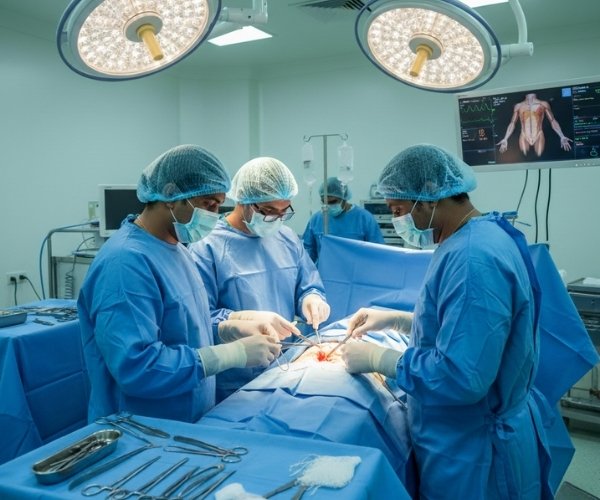
Laparoscopic Hernia Surgery in Indore provides minimally invasive treatment with smaller cuts, less pain, quicker recovery, and expert surgeons ensuring safe.
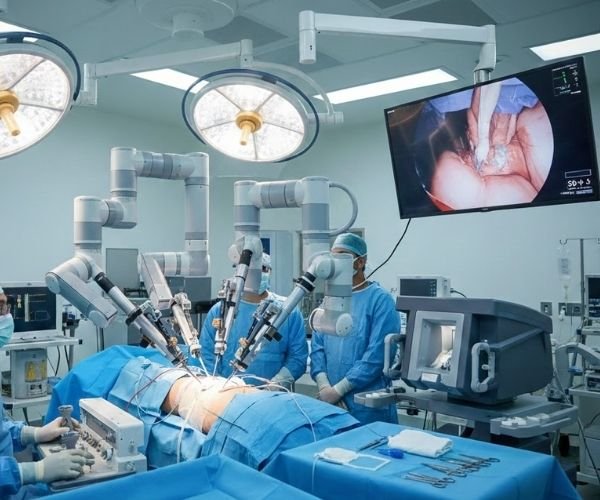
Robotic Surgery for Hernia in Indore offers advanced, precise, and minimally invasive hernia repair with faster healing, minimal pain, and improved surgical accuracy for better outcomes.
Incisional hernias are relatively common, occurring in about 10-20% of people who have had abdominal surgery. Risk factors include obesity, smoking, poor wound healing, infection, diabetes, older age, and excessive strain on the surgical incision.
Diagnosis of an incisional hernia is usually based on a physical examination by a healthcare professional. Imaging tests such as ultrasound, CT scan, or MRI may be ordered to confirm the diagnosis, assess the size and location of the hernia, and evaluate any complications.
The main treatment option for incisional hernias is surgical repair. The surgery involves reinforcing the weakened abdominal muscles and closing the hernia opening with sutures, mesh, or a combination of both. The choice of surgical technique (open or laparoscopic) depends on various factors and should be discussed with a surgeon.
The duration of incisional hernia surgery can vary depending on the size and complexity of the hernia, as well as the surgical technique used. Generally, the procedure can take between 1 to 3 hours.
Recovery time can vary depending on several factors, including the size of the hernia, the surgical approach used, and individual healing capacity. In general, patients can expect a recovery period of a few weeks to a few months before returning to normal activities. The surgeon will provide specific post-operative instructions and guidelines for a smooth recovery.
As with any surgery, there are potential risks and complications associated with incisional hernia surgery. These may include infection, bleeding, wound healing problems, recurrence of the hernia, pain, damage to surrounding structures, and anesthesia-related risks. It’s important to discuss the potential risks with your surgeon.
Before undergoing surgery, it’s important to have a consultation with the surgeon and ask questions to clarify your concerns. Some questions to consider include:
What is your experience and expertise in performing incisional hernia surgeries?
What is the recommended surgical approach for my specific case and why?
What are the potential risks and complications associated with the surgery?
How long will the recovery process take, and what should I expect during the recovery period?
Are there any alternative treatment options available for my condition?
The recovery timeline varies from person to person, and your surgeon will provide specific instructions based on your condition. Generally, patients are advised to avoid heavy lifting and strenuous activities for 4 to 6 weeks after surgery. It’s important to gradually increase physical activity under the guidance of your surgeon.
It depends on your case. An incisional hernia surgeon should have surgical training, experience in the technique you need, clear advice on mesh, proper follow-up and genuine reviews. Dr. Achal Agrawal, consultant laparoscopic and GI surgeon at Indore Laparoscopy Center, Indore, is one surgeon you can consult.
No, the weakened wall does not close by itself. A binder may ease discomfort but does not cure it. A small hernia without symptoms may only be watched, and that is the surgeon’s call. Sudden severe pain or a hard bulge needs urgent care.
The Amazing Steps of our Treatment
1
Book your Appointment
2
In Person Counselling
3
Weekly Followup

Get in Touch