
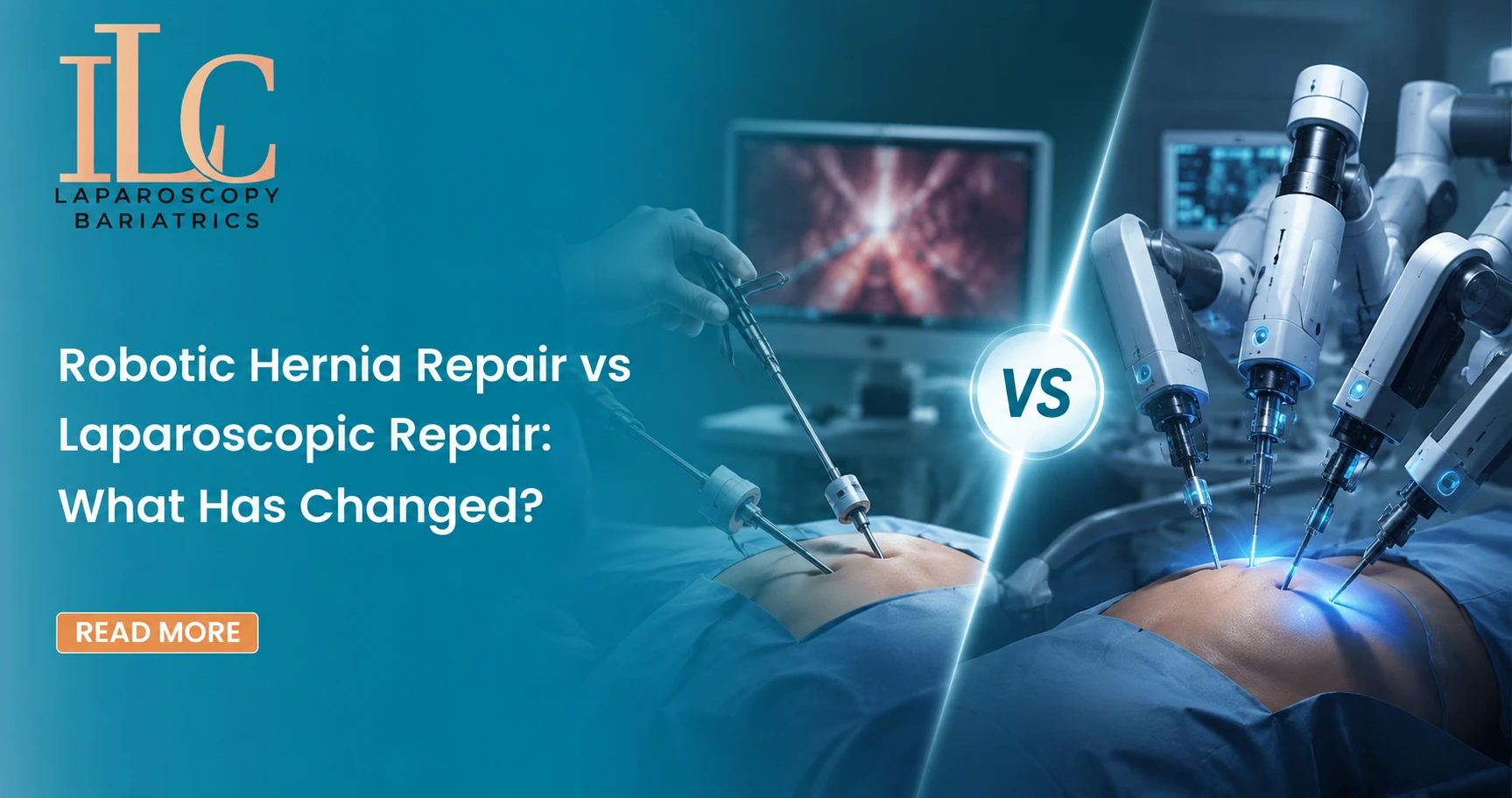
Over the years, the surgery to repair a Hernia has changed dramatically, and many new, less-invasive procedures have been developed that have helped patients to experience better results and recovery. Although laparoscopic surgery has for long been the gold standard for many types of hernia surgery, Robotic Hernia Repair is still a relatively new frontier that gives surgeons a whole new level of precision and control.
Understanding the difference between these methods of treatment can assist patients in choosing what manner of treatment is to their choice.
Understanding Laparoscopic and Robotic Hernia Surgery
Laparoscopic Hernia Repair is a technique in which the procedure is carried out by making small incisions with the aid of a camera and special surgical tools. This technique has a few advantages over traditional open surgery, such as less pain, fewer scars, and quicker recovery.
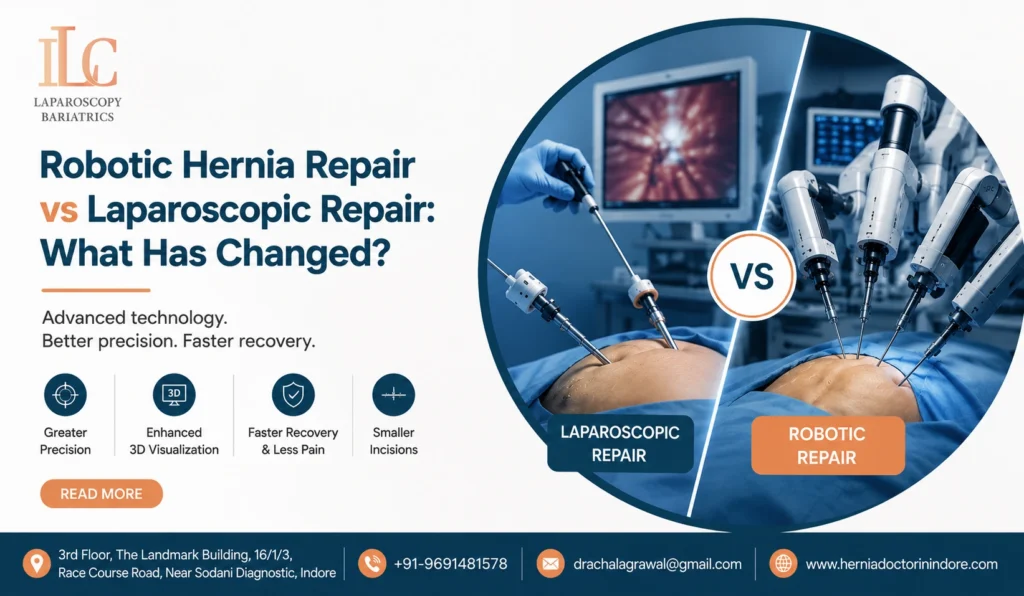
Robotic Hernia Surgery is based upon the same principle of minimal incision surgery, except that it uses a robotic platform which is fully controlled by the surgeon. For complex surgical procedures, the robotic system offers better visualization, dexterity and precision.
What Has Changed with Robotic Hernia Repair?
One of the greatest developments is the application of high-definition 3D visualisation. Robotic platforms offer 3D high-definition visualisation of the surgical field that is not offered by traditional laparoscopic systems. This enables surgeons to see tissues and anatomical structures more clearly.
The robotic system also includes wristed instruments that move like a human arm but have a greater range of motion than traditional laparoscopic instruments. This increased flexibility is especially useful in cases of complicated hernia surgery and reconstructive surgery.
Robotic Inguinal Hernia Repair
The use of Robotic Inguinal Hernia Repair to treat hernias in the groin area is becoming more popular. The robotic platform enables the surgeon to do precise dissections and mesh placement. Minimal discomfort, smaller incisions and rapid return to normal activities often benefit patients.
The improved visualization and instrument control may be beneficial for recurrent inguinal hernia and bilateral inguinal hernia, where surgical precision is crucial for optimal long-term results.
Robotic Ventral Hernia Repair
Robotic Ventral Hernia Repair provides a number of benefits to those who suffer from abdominal wall defects. The robotic system enables the surgeon to close the defect of the hernia and place the mesh more effectively and accurately. This could help to improve repair and reduce recurrence in some patients.
Robotic technique may also be used to help perform complex abdominal wall reconstruction with the benefits of minimally invasive surgery.
Benefits of Robotic Hernia Surgery
Robotic surgery can provide advantages over traditional laparoscopic surgery, including:
-
- Enhanced surgical precision
-
- Improved 3D visualization
-
- Better instrument flexibility
-
- Reduced postoperative pain
-
- Faster recovery
-
- Smaller scars
-
- Reduced risk of complications in complex cases (possibly)
Robotic Hernia Surgery Cost
Many patients inquire about the Robotic Hernia Surgery cost before treatment. Hospital facilities, surgeon experience, robotic technology utilized, and post-operative care requirements are some of the factors that can affect total cost, depending on the type of hernia, what hospital facilities are being used, surgeon expertise, robotic technology used and post-operative care needs.
Although robotic surgery can be more expensive than standard laparoscopic surgery, many patients assess treatment options based on the benefits of precision, recuperation, and outcomes.
Conclusion
Laparoscopic and Robotic surgery are both effective methods for hernia repair. Robotic Hernia Repair, however, is the newest in the technology of minimally invasive surgery, offering superior precision, visualization and surgical control. When patients have inguinal, complex, recurrent and/or ventral hernias, and when performed by a trained hernia specialist, robotic technology can provide a great benefit and help to improve long-term results.