TL;DR
- Umbilical hernias in adults do not resolve on their own.
- Common symptoms include a belly button bulge and pain
- The ultimate treatment is surgery.
- Unimproved care exposes to the risk of being overpowered.
- Minimal improvement has fewer complications and the best outcomes.
The umbilical hernia is defined as a bulge of any layer of the intestine or fatty tissue through a weak point that is close to the belly button. Umbilical Hernias are common in infants, but when they occur in an adult, they tend not to heal on their own, and they are accompanied by related complications (especially the hernia not resolving in the extremity).
Understanding the symptoms of umbilical hernia in adults and when surgery is necessary in adult life, the serious complications of the umbilical hernia could be avoided.
What Causes Umbilical Hernia in Adults?
The umbilical hernias of the adult type take place as an outcome of the augmented pressure within the abdomen. Common risk factors include:
- Obesity
- Pregnancy or multiple childbirths
- Heavy lifting
- Chronic coughing
- Fluid accumulation in the abdomen
- Previous abdominal surgery
- Weak abdominal muscles
With time, this pressure causes the defect to enlarge, and tissue to be bulged out.
Umbilical Hernia Symptoms in Adults
The symptoms can be mild initially and deteriorate with time. Typical umbilical hernia symptoms include:
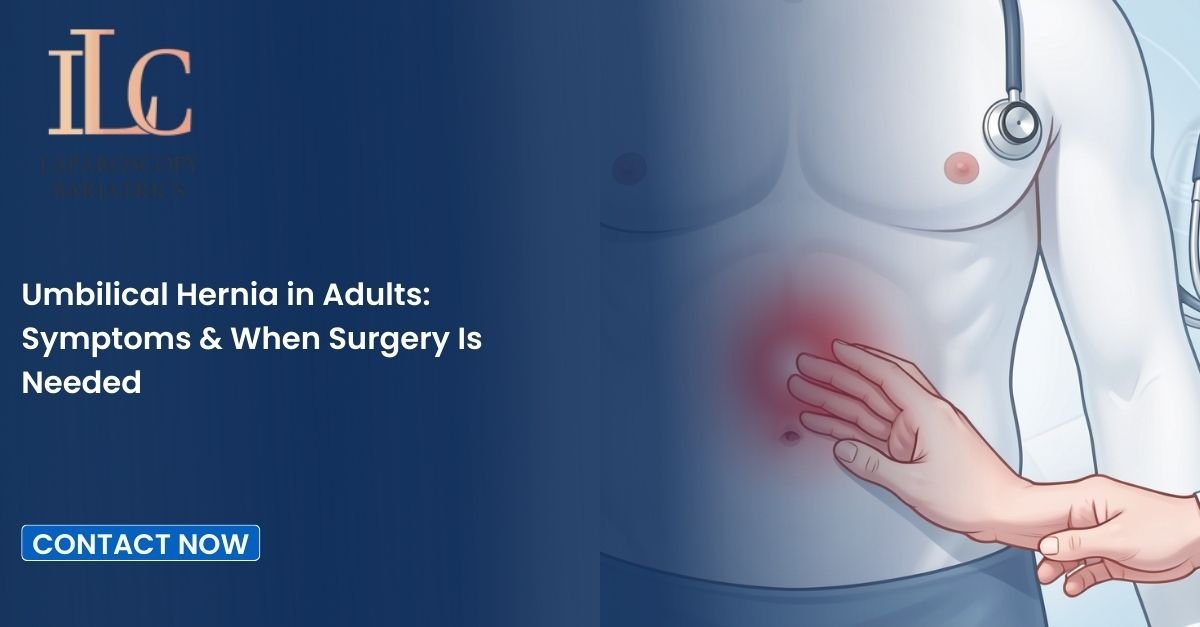
- A soft bulge near the belly button
- Discomfort or pain, in particular, coughing and lifting.
- Abdominal pressure or weightiness.
- Coldness or pain in the abdominal periphery.
- In severe cases, nausea or bloating occurs.
There is a risk of severe pain, vomiting, or the inability to press the bulge back, which are the signs of being strangled- it is a medical emergency that needs first aid.
How to Treat Umbilical Hernia in Adults
Unlike pediatric cases, treatment for umbilical hernia in adults nearly always includes surgery. Hernias tend to increase with time and have a risk of bowel obstruction or strangulation.
Surgical options include:
Laparoscopic mesh repair (minimally invasive)
Large or complex defects are treated by open hernia repair.
Most patients have had laparoscopic surgery due to fewer incisions, quicker recovery, and less pain after the operation.
According to Dr. Achal Agrawal, early surgery helps to reduce the risk of complications and better prognoses in the long-term perspective. Being a seasoned Umbilical Hernia Surgeon in Indore, he specializes in the state-of-the-art minimally invasive surgery of the hernia, depending on each individual.
When Is Surgery Necessary?
Surgery is recommended when:
- The hernia is either painful or growing in size.
- The day-to-day functioning is impacted.
- Evidence of obstruction or strangulation.
- It is no longer safe to observe on the conservative end.
It is not good to postpone treatment and complicate surgery in the future.
Final Thoughts
An umbilical hernia does not only involve aesthetics in adults- it is a progressive disorder that needs to be seen by a doctor. The early identification and professional care of the surgery guarantees a faster recovery and the avoidance of life-threatening issues.
In case of belly button protrusion and continued belly pains, it is always safe to seek the services of a competent practitioner.