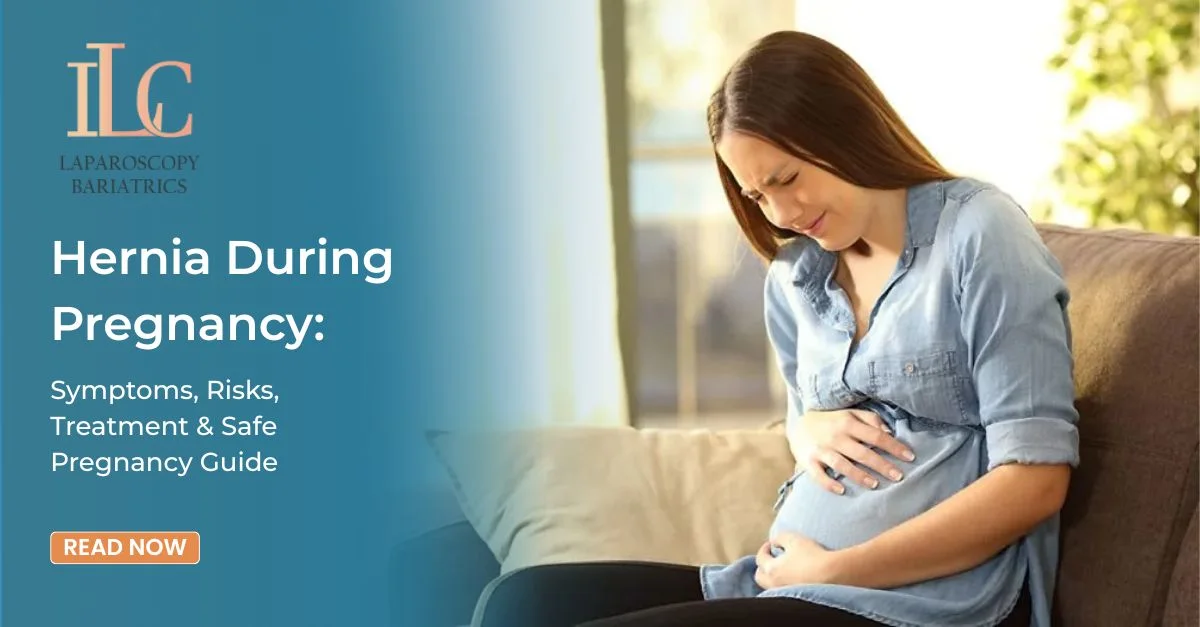
The developing baby puts additional strain on the abdominal wall and this may cause hernias or make them more visible. Early detection of symptoms allows for a better chance at complications and having a healthier pregnancy. This guide provides an understanding of how Hernias happen in pregnancy, what symptoms to watch for, treatment options, and when medical treatment is required.
What Is a Hernia During Pregnancy?
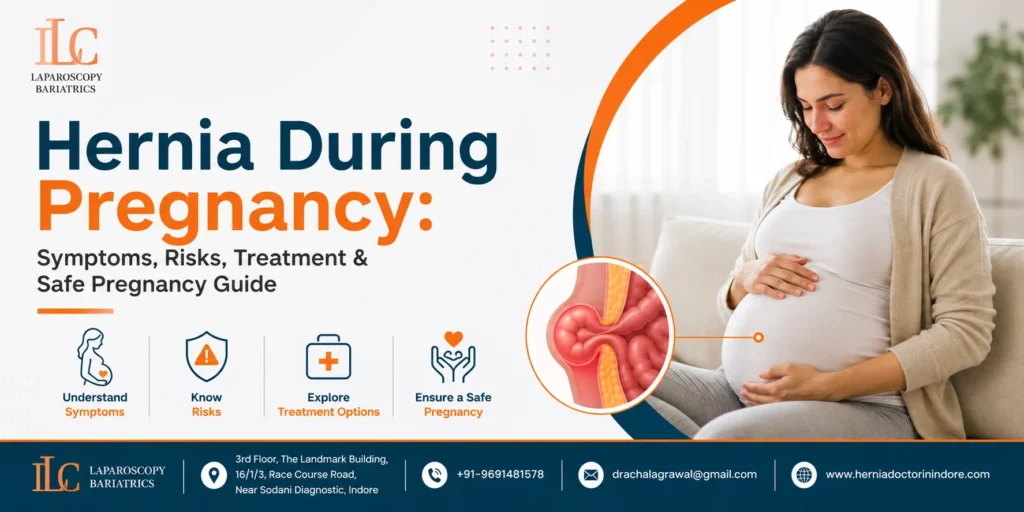
A hernia is the result of an organ or fat being forced through a weak spot in the abdominal wall. The expanding abdomen during pregnancy puts more stress on this. They are most frequently Umbilical Hernia During Pregnancy, inguinal hernia, and incisional hernia in women who have had previous abdominal surgery, like a C-section.
What Causes a Hernia During Pregnancy?
Several things can make a pregnant woman more likely to develop a hernia, such as:
- Growing belly pressure on stomach organs.
- Weak abdominal muscles, as they are weakened naturally.
- Previous abdominal surgery
- Multiple pregnancies
- Excess fatness or weight gain
- Heavy lifting
If the child suffers from chronic constipation or if he or she often coughs.
Pregnancy Hernia Symptoms
Symptoms depend upon the size and type of the hernia. Common signs include:
- A soft or protruding area around the belly button/groin area
- Pain or discomfort on standing, coughing or lifting.
- Increase in size of the belly-button area
- Some kind of weight or weightiness
- Burning/aching around the bulge area.
Usually, symptoms are more pronounced as the uterus enlarges in the second and third trimesters.
Risks and Warning Signs
Generally, the hernias that develop during pregnancy are harmless to the baby and are generally safe to be monitored. If you have any of the following symptoms, however, medical attention is required:
- Severe or sudden pain
- Persistent vomiting
- Fever
- A bulge that becomes hard and/or changes colour
- Unexpected, non-pushing back swelling.
These symptoms can be signs of a rare complication, one which is often a strangulated hernia or bowel obstruction and must be treated as an emergency.
What are the Steps for the Diagnosis and Treatment of a Hernia?
A diagnosis of hernia is typically made during a physical exam and history. In most cases, imaging during pregnancy is avoided unless it is necessary, and an ultrasound may be ordered if it is necessary.
Conservative Management
For most women, surgery during pregnancy is not necessary. Treatment typically targets the following aspects:
- Regular observation
- Avoiding heavy lifting
- If recommended, wear a support belt.
- Managing constipation
- Obtaining a healthy weight gain
- Exercise gently and safely (especially during pregnancy)
When is Surgery needed?
Only performed if complications like strangulation or intestinal blockage occur. Surgery may be delayed in uncomplicated cases after birth.
Pregnancy After Hernia Surgery
There are many women who have hernia repairs and their pregnancy is healthy. Depending on the surgery performed, your surgeon might suggest delaying pregnancy until you’ve fully recovered. Follow-up appointments are used to track healing and prevent recurrence.
How to Reduce the Risk of Hernia During Pregnancy
Take steps to reduce your risks:
- Having a healthy pregnancy weight
- To avoid constipation, eat a diet rich in fibre and drink plenty of liquids.
- Ensure that appropriate lifting procedures are followed.
- If a chronic cough is present, it is important to treat it.
- Building the core muscles before pregnancy under expert advice and supervision.
When to See a Hernia Specialist?
If you see a new bulge, pain or swelling during pregnancy, please consult a specialist. Early evaluation will help to identify whether observation or treatment is needed, and also help to prevent complications. If you have had hernias in the past, you may want to read more about Hernia Types, Umbilical Hernia in Adults, Incisional Hernia Treatment and Hernia Surgery Recovery.