
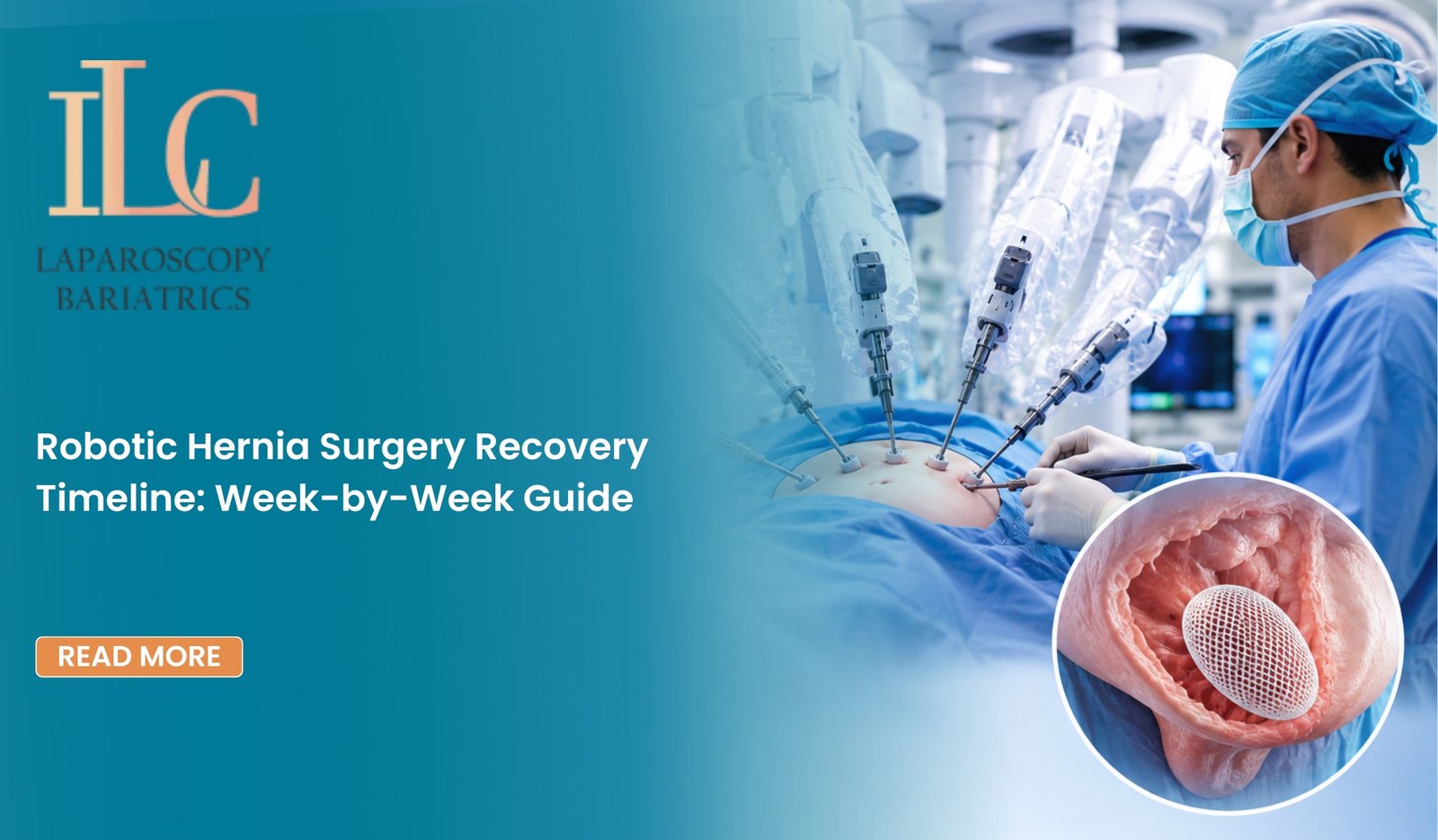
Robotic hernia surgery is a new, less invasive treatment for all of the various types of hernias. Robotic Hernia Repair provides all the benefits of traditional open surgery, but with a smaller incision, more precision, less pain after surgery, and quicker recovery. Every patient’s recovery is different, but it helps to have an idea of what to expect in the recovery process and how long it normally takes to get back to normal.
Day of Surgery
The majority of patients who undergo Robotic Hernia Surgery can go home the same day or within 24 hours. It is normal to experience some pain, tiredness and tenderness around the cuts. Patients are advised to take up light walking as early as possible after the surgery in order to promote circulation and to prevent the occurrence of complications.
First Week
In the first week, patients generally will have a gradual improvement in pain and mobility. Walking is the best exercise, and heavy lifting and strenuous activities should be avoided. The majority of people are able to do light daily tasks and follow their surgeon’s post-surgical advice. Getting enough fluids, a proper diet, and rest are all a part of healing.
Week 2–4
Most patients report a lot of improvement in comfort and energy level by the second to fourth week. The swelling and tenderness typically go down significantly. During this stage, many people can return to light office work and to everyday activities. Heavy lifting and high-intensity exercise should still be avoided unless the surgeon says it is okay.
Month 1–3
For months 1–3, patients may be feeling fully recovered but still undergoing internal healing. The majority of people eventually get back to their usual routine with some moderate exercise and recreational activities. Follow-up appointments are arranged to make sure that things are healing properly and to keep an eye out for any complications or recurring issues.
Returning to Work
Timing to return to work varies depending on the type of work. People who work on a desk can return in 1-2 weeks, people with physical work may need 4-6 weeks or more. Recommendations for recovery should always be tailored to the patient’s condition and surgery.
Exercise Guidelines
Walking is encouraged right after surgery with the use of light walking. Low-impact activity can typically be returned within 1-2 weeks. Heavy lifting, abdominal exercises and strength training should only be undertaken after medical clearance. A gradual progression allows for protection of the surgical repair and minimises recurrence.
Recovery After Robotic Inguinal Hernia Repair
There is usually a quicker recovery time after Robotic Inguinal Hernia Repair than with open surgery. Most patients have less pain, smaller scars and re-enter earlier into their activities of daily living. Light activities are resumed within days, and recovery may take several weeks.
Recovery After Robotic Ventral Hernia Repair
Robotic Ventral Hernia Repair may be used for larger defects in the abdominal wall and may need a slightly longer recovery time. Patients are usually encouraged to refrain from heavy lifting for a few weeks to allow proper healing of the abdominal wall. Success in the long term will require regular follow-up.
Cost Considerations
Cost is often a question that many patients ask before undergoing robotic hernia surgery. Several factors can affect the cost of a hernia repair, such as the type of hernia, hospital facilities, surgeon skill, robotic technology being used and the need for post-operative care. While robotic procedures may be more expensive up front, many patients will find the advantages of minimally invasive surgery, quicker recovery, and more precise surgery to be worth their while.
Conclusion
Robotic Hernia Repair recovery is generally smoother and faster than more traditional surgical options. Post-operative care, attending Follow-up Appointments, and the gradual reintegration of activities are crucial for wound healing and the success of either the Robotic Inguinal Hernia Repair or Robotic Ventral Hernia Repair.