
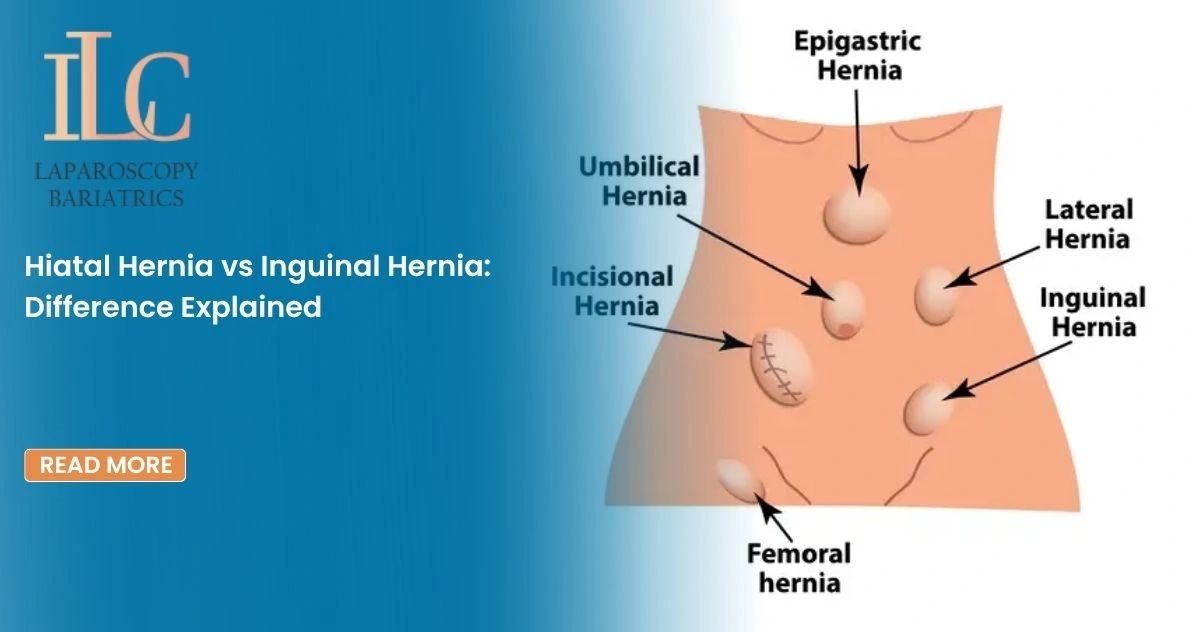
A Hernia Occurs when an organ or tissue bulges through a weak spot in the muscle or tissue wall that usually contains it. The most common forms of hiatal hernia and inguinal hernia differ in localization in the body and lead to different clinical conditions. It will alert patients to what might be warning signs, and it may guide them to the right care.
What Is a Hiatal Hernia?
A Hiatal Hernia is when part of the stomach slides up through the diaphragm and into the chest. The diaphragm muscle separates your chest and stomach. This type of hernia often has symptoms, including acid reflux, heartburn, chest pain, and nausea. Small hiatal hernias usually have no symptoms, and larger ones may be treated.
What Is an Inguinal Hernia?
An Inguinal Hernia occurs in the groin region when tissue, due to a tear or weakened abdominal wall, comes through an opening. More common in men, but also seen in women.
Common signs are a lump in the groin, pain upon standing or bending, and inactivity relief; the suffering can be relieved more with practice. Inguinal hernias often become more prominent with the passage of time.
Difference Between Hiatal Hernia and Inguinal Hernia
| Feature | Hiatal Hernia | Inguinal Hernia |
| Location | Upper stomach moves into the chest | Tissue pushes through the groin |
| Main cause | Weak opening in the diaphragm | Weak spot in the abdominal wall |
| Common symptoms | Acid reflux, heartburn, chest discomfort | Groin bulge, pain, pressure |
| Visible bulge | Usually not visible | Often visible or noticeable |
| Risk group | Adults, especially with reflux | More common in men |
| Treatment | Medicines, diet changes, surgery if needed | Monitoring or surgical repair |
Which Hernia Needs Urgent Care?
Both hernias should be evaluated if signs or symptoms are present or worsening. A hiatal hernia may be treated if reflux continues or if swallowing is compromised.
Immediate Treatment is Needed for this type of hernia if the bulge becomes hard, painful or you cannot push it back in (inguinal hernia). May indicate an incarcerated hernia
Conclusion
While both conditions involve the same process of tissue pushing through a weakened area, hiatal hernia and Inguinal Hernia are different in that aspect. While a hiatal hernia relates to the stomach and diaphragm, an inguinal hernia relates to the groin. It is essential to make a correct diagnosis, as symptoms, location, and treatment differ.
Not Sure Which Type of Hernia You Have?
Hiatal and inguinal hernias have different symptoms and require different treatment approaches. A proper evaluation helps determine the right diagnosis.
FAQ
Can a hiatal hernia become an inguinal hernia?
No. They are different conditions affecting different parts of the body.
Is surgery necessary for both?
Not always. Treatment depends on symptoms and severity.
Which hernia causes acid reflux?
Hiatal hernia commonly causes acid reflux and heartburn.
Which Hernia is More Serious?
An inguinal hernia is generally considered more serious because it can become strangulated and require emergency surgery. A hiatal hernia is usually less urgent but may cause chronic acid reflux and digestive problems.
Can a Hiatal Hernia Turn Into an Inguinal Hernia?
No. A hiatal hernia and an inguinal hernia develop in different parts of the body, so one cannot turn into the other.